
Storm Drainage Installation
Storm Drainage Installation in Houston, TX
Houston's flat terrain, heavy clay soil, and intense seasonal rainfall make proper storm drainage essential for protecting homes, foundations, and landscaping from standing water and flooding. Frank's Irrigation Repair installs storm drainage systems for residential and commercial properties throughout Houston, TX, designed to redirect excess rainwater away from structures, driveways, and low-lying yard areas. Without an effective drainage system, Houston properties are especially prone to pooling water, soil erosion, and long-term foundation damage caused by prolonged saturation.
French Drain Installation
French drains are one of the most common and effective drainage solutions for Houston properties dealing with slow-draining clay soil. Frank's Irrigation Repair installs French drain systems that redirect groundwater and surface runoff away from foundations, yards, and low points where water tends to collect.
Trenching and Gravel Bed Placement
A perforated pipe is placed within a gravel-lined trench, allowing water to filter in and flow away from the problem area toward a safe discharge point.
Foundation Perimeter Drainage
French drains installed along a home's foundation help intercept water before it can seep into crawl spaces or contribute to slab movement common in Houston's clay soil.
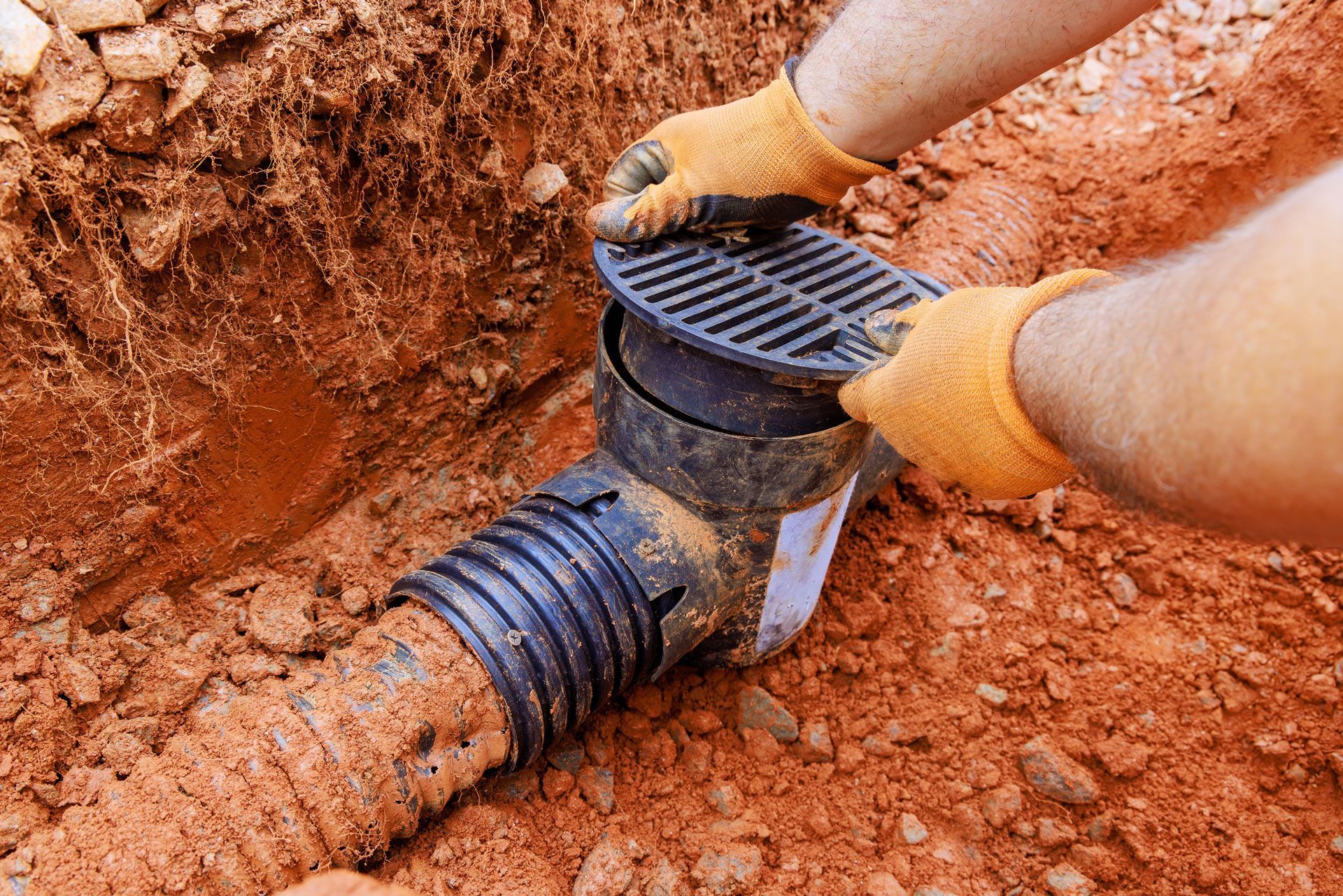
Surface Drainage and Catch Basin Systems
Surface drains and catch basins collect standing water from low points in a yard, driveway, or parking area and channel it through underground piping to an appropriate outlet. Frank's Irrigation Repair installs these systems in locations where water regularly pools after Houston's frequent heavy rain events.
Yard Grading and Low-Point Identification
Proper installation begins with identifying where water naturally collects on a property, often in low-lying areas near patios, driveways, or fence lines.
Catch Basin and Grate Placement
Catch basins are installed flush with the ground surface, fitted with grates that allow water to enter while keeping debris out of the piping system.
Underground Pipe and Discharge Line Installation
Once water is collected through French drains or catch basins, it needs to be carried away from the property through underground piping to a safe discharge point, such as a street curb, ditch, or municipal storm drain connection where permitted.
Solid Pipe Runs to Discharge Points
Solid PVC piping carries collected water away from collection points to prevent it from resurfacing near the home or landscaping.
Pop-Up Emitter Installation
Pop-up emitters release water at a safe distance from the home, opening under water pressure and closing flush with the yard when not in use.
Yard Regrading for Water Flow
In some cases, drainage issues stem from improper grading rather than a lack of piping. Frank's Irrigation Repair evaluates yard slope and grading as part of storm drainage projects to ensure water flows naturally away from the home rather than pooling near the foundation.
Slope Correction Near Foundations
Regrading near the foundation ensures water flows away from the home rather than settling against the slab, a common issue in Houston's flat neighborhoods.
Erosion Control Integration
Grading work is often paired with erosion control measures like rock beds or ground cover to stabilize soil in areas prone to washout.
Drainage System Repair and Maintenance
Existing drainage systems can become clogged with silt, roots, or debris over time, reducing their effectiveness. Frank's Irrigation Repair inspects and repairs existing storm drainage systems, clearing blockages and replacing damaged piping or catch basins as needed.
Clogged Pipe and Catch Basin Clearing
Sediment and debris buildup inside pipes or basins is cleared to restore proper water flow through the system.
Pipe Replacement for Root Intrusion
Tree roots can crack or infiltrate drainage piping over time, requiring section replacement to restore full function.
Frequently Asked Questions
Why does my yard flood after heavy rain in Houston?
Houston's clay soil drains slowly, and without proper grading or drainage piping, water often has nowhere to go except to pool in low-lying areas of the yard.
What is the difference between a French drain and a catch basin?
A French drain collects groundwater through a perforated pipe in a gravel trench, while a catch basin collects surface water through a grated opening at ground level.
How deep does a French drain need to be installed?
Depth depends on the specific drainage issue and soil conditions, though French drains are typically installed below the frost line and deep enough to intercept groundwater flow.
Can storm drainage prevent foundation damage?
Yes, redirecting water away from a home's foundation reduces the soil expansion and contraction that contributes to foundation movement in Houston's clay soil.
How much does storm drainage installation cost in Houston?
Costs vary based on the size of the property, the length of piping required, and whether grading or catch basins are needed in addition to piping.
Where does the water go after it enters a storm drainage system?
Water is typically directed to a street curb, drainage ditch, or in some cases a municipal storm drain connection, depending on local regulations and property layout.
Can storm drainage systems be added to an existing landscaped yard?
Yes, drainage systems can be installed around existing landscaping using trenching methods that minimize disruption to established plants and hardscaping.
How do I know if my yard needs regrading instead of a drainage pipe?
If water consistently pools in a specific area due to a low spot rather than poor soil absorption, regrading may resolve the issue more effectively than piping alone.
What causes a catch basin to stop draining properly?
Catch basins commonly stop draining due to debris, leaves, or sediment blocking the grate or accumulating inside the connected piping.
Do storm drainage systems require maintenance?
Yes, periodic inspection helps identify clogs, root intrusion, or sediment buildup before they cause the system to back up or fail during heavy rain.
Is a permit required for storm drainage installation in Houston?
Permit requirements depend on the scope of the project and whether the system connects to a municipal storm drain, so local regulations should be checked before installation begins.
